Explainer · Energy
Why did oil fall 13.32% before any extra barrels arrived?
Futures price expected supply and risk, not only oil already delivered.
Updated November 13, 2026 · Numbers as published by each source on the date shown
Because the price that moved is a futures price. Front-month ICE Brent crude for January delivery settled at $98.32 a barrel on November 6, 2026, down $15.11, or 13.32%, on the week, Dow Jones Market Data says. EIA says events can create uncertainty about future supply or demand, and that forward-looking behavior can add a risk premium above what current supply and demand alone would imply. When that premium shrinks, the quote can drop before extra cargoes show up.
Clearer expectations about future barrels help operators plan fuel costs and shipping while new supply works its way into the market.
What is moving forward right now
Dow Jones Market Data, published November 6, 2026, says front-month ICE Brent crude for January delivery lost $15.11 per barrel, or 13.32%, to $98.32 that week. All of those prices are calculated from the settlement of the current front-month contract. Adding the decline back to the settle puts the prior settlement at $113.43. That 13.32% move was the largest one-week percentage decline for the series since the week ending April 24, 2020.
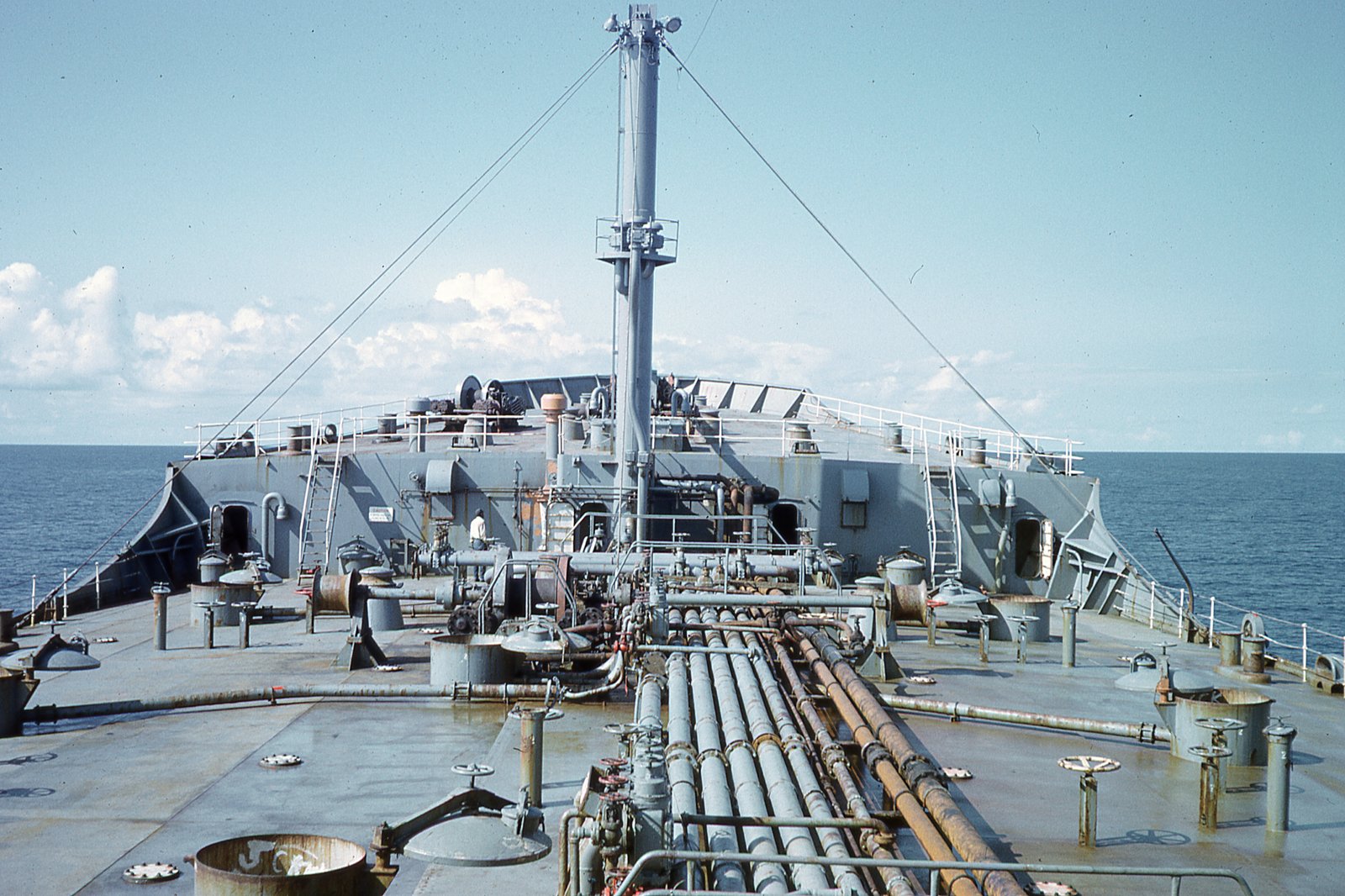
Surveys of physical supply were moving the other way, toward more oil, while the futures quote was already down. A Bloomberg survey reported by Quartz on November 6 put OPEC crude output at 22.8 million barrels a day in October, up 930,000 barrels a day, about 88% of the February level. JPMorgan, as reported by The Straits Times on November 9, estimated world supply ran 1.1 million barrels a day above demand in September and 1.4 million barrels a day above demand in October. Those are a survey and a bank estimate, published before OPEC's own table. OPEC's Monthly Oil Market Report, published November 11, 2026, shows OPEC crude production at 27.16 million barrels a day in October, up 1.97 million barrels a day from September, according to secondary sources, the outside assessments OPEC uses for its complete member total.
Futures price expected barrels, not only delivered ones
EIA's April 24, 2026 Today in Energy says futures contracts are exchange-traded agreements to buy and sell commodities at an agreed-upon date in the future. The front-month futures contract for Brent, traded on the Intercontinental Exchange, is the most widely used measure of the Brent price. Spot prices, including Dated Brent, are for immediate or near-immediate delivery. A large move in the futures quote can land while the cargoes that will actually load are still being lined up.
The price at the pump is a later step, after crude, refining, and distribution. For that lag, see why gas prices don't follow oil prices right away. US wells can keep producing through a price move. See how the US pumps near-record oil with far fewer drilling rigs, and why the US still imports crude while it exports more petroleum than it imports.
The risk premium can shrink before the oil arrives
EIA's guide to what drives crude oil prices says events may lead to actual disruptions or create uncertainty about future supply or demand, which can lead to higher volatility in prices. When there are significant concerns about a possible disruption, and spare capacity and inventories are not seen as enough to offset the lost supply, prices may be above the level that might be expected if only current demand and supply were considered, as forward-looking behavior adds a risk premium.
A smaller chance of lost supply lets that premium unwind first. The barrels counted in a later loading report have not all reached a refinery yet. The futures settlement has already moved.
Get the free Monday Haul for oil and supply numbers each week.
The Monday Haul · free weekly email
Energy, industry, infrastructure and policy in one short email every Monday, including new factories and grid projects. Every item sourced and dated. More about the Haul
Supply that is recovering, and a surplus estimate
OPEC's official October table is now out. The Monthly Oil Market Report, published November 11, 2026, shows OPEC crude production at 27.16 million barrels a day in October, up 1.97 million barrels a day from September, according to secondary sources. The Bloomberg survey, via Quartz on November 6, had put the same month at 22.8 million barrels a day, up 930,000, about 88% of February. JPMorgan's estimate, via The Straits Times on November 9, is a world surplus that widened from 1.1 million barrels a day in September to 1.4 million in October.
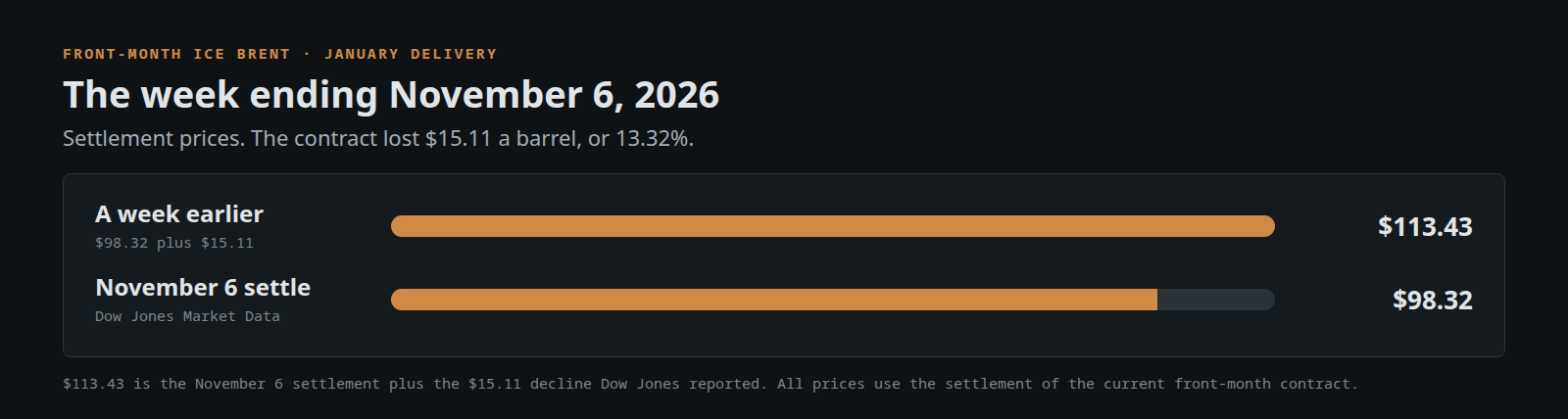
The two bars are the same contract, a week apart, on settlement prices. The drop is the futures market repricing expected supply and the risk around it. Loadings and physical price differences are what show whether that reprice is showing up in delivered barrels.
What to watch next
The next EIA Short-Term Energy Outlook and the next front-month ICE Brent settlements show whether the quote keeps moving with expected supply. Physical differentials and loadings show whether the futures move is arriving in the barrels themselves.
The Monday Haul follows these oil and supply numbers each week. Follow the projects on the live dashboard. Past issues are in the archive.
Common questions
Why did oil fall before extra barrels arrived?
Because the price that moved is a futures price. Front-month ICE Brent for January delivery settled at $98.32 a barrel on November 6, 2026, down $15.11, or 13.32%, on the week. EIA says forward-looking behavior can add a risk premium above what current supply and demand alone would imply. When that premium shrinks, the quote can drop before extra cargoes show up.
Which Brent price fell 13.32%?
Dow Jones Market Data, published November 6, 2026, says front-month ICE Brent crude for January delivery lost $15.11 per barrel, or 13.32%, to $98.32 that week. All prices are based on the settlement of the current front-month contract. Adding the decline back to the settle puts the prior settlement at $113.43. It was the largest one-week percentage decline for that series since the week ending April 24, 2020.
What is an oil risk premium?
EIA says that when concerns about a disruption meet limited spare capacity and inventories, prices may sit above the level current demand and supply alone would imply, because forward-looking behavior adds a risk premium. When the market prices a smaller chance of lost supply, that premium can shrink before the physical barrels change.
Did OPEC supply rise in October 2026?
Yes. OPEC's Monthly Oil Market Report, published November 11, 2026, shows OPEC crude production at 27.16 million barrels a day in October, up 1.97 million barrels a day from September, according to secondary sources, the outside assessments OPEC uses for its complete member total. A Bloomberg survey reported by Quartz on November 6, 2026, before that report, had put output at 22.8 million barrels a day, up 930,000 barrels a day, about 88% of the February level. JPMorgan, as reported by The Straits Times on November 9, estimated a surplus of 1.1 million barrels a day in September, widening to 1.4 million in October.
Sources
- Front-month ICE Brent crude fell 13.32% this week to settle at $98.32, Dow Jones Market Data, November 6, 2026, via Morningstar. Front-month ICE Brent for January delivery lost $15.11 per barrel, or 13.32%, to $98.32. Largest one-week percentage decline since the week ending April 24, 2020. All prices are based on the settlement of the current front-month contract.
- $113.43 is this page's arithmetic: the $98.32 settlement plus the $15.11 decline Dow Jones reported. It is the prior front-month settlement implied by those two published figures.
- Brent crude oil spot prices surge past futures price in April, U.S. Energy Information Administration, Today in Energy, April 24, 2026. Futures contracts are exchange-traded agreements to buy and sell commodities at an agreed-upon date in the future. The front-month Brent contract on the Intercontinental Exchange is the most widely used measure of the Brent price. Spot prices are for immediate or near-immediate delivery. Data source line credits Intercontinental Exchange.
- What drives crude oil prices: Spot Prices, U.S. Energy Information Administration, opened November 9, 2026. Events may lead to actual disruptions or create uncertainty about future supply or demand. When spare capacity and inventories look insufficient, prices may sit above the level current demand and supply alone would imply, as forward-looking behavior adds a risk premium.
- OPEC October crude output, Bloomberg survey, Quartz, November 6, 2026. OPEC pumped 22.8 million barrels a day in October, up 930,000, about 88% of the February level.
- Oil steadies after signals of restraint, Hormuz risks persist, The Straits Times, November 9, 2026. JPMorgan estimated a surplus of 1.1 million barrels a day in September, widening to 1.4 million barrels a day in October.
- Monthly Oil Market Report, November 2026, OPEC, published November 11, 2026. Table 5-7, OPEC crude oil production based on secondary sources, lists 27,164 thousand barrels a day in October and 25,199 in September, a rise of 1,965, or 27.16 million barrels a day, up 1.97 million. The report is also linked from OPEC's Monthly Oil Market Report page.
- View of an oil tanker in 1972, facing the bow, photo by Roger Vreeland. CC0 1.0, via Wikimedia Commons.
