Can a giant AI data center lower a small town's power bills?
Near Willcox in Cochise County, Arizona, SpaceX says its proposed supercompute campus could cut local co-op members' bills by 10% to 40%. Here is how one huge customer can lower a small utility's bills, and the steps left to lock that in.
Updated November 28, 2026 · Numbers as published by each source on the date shown
It can, if the big customer pays its own way. Much of a utility's cost is fixed in poles, wires and substations, and prices “tend to go down when these costs are spread over more sales,” Lawrence Berkeley National Laboratory explains. Near Willcox, Arizona, SpaceX proposes a bill credit that the local co-op's CEO says could cut the usage-based part of a home bill by about 40% at full size. The terms are still being worked out, and state regulators must approve them.
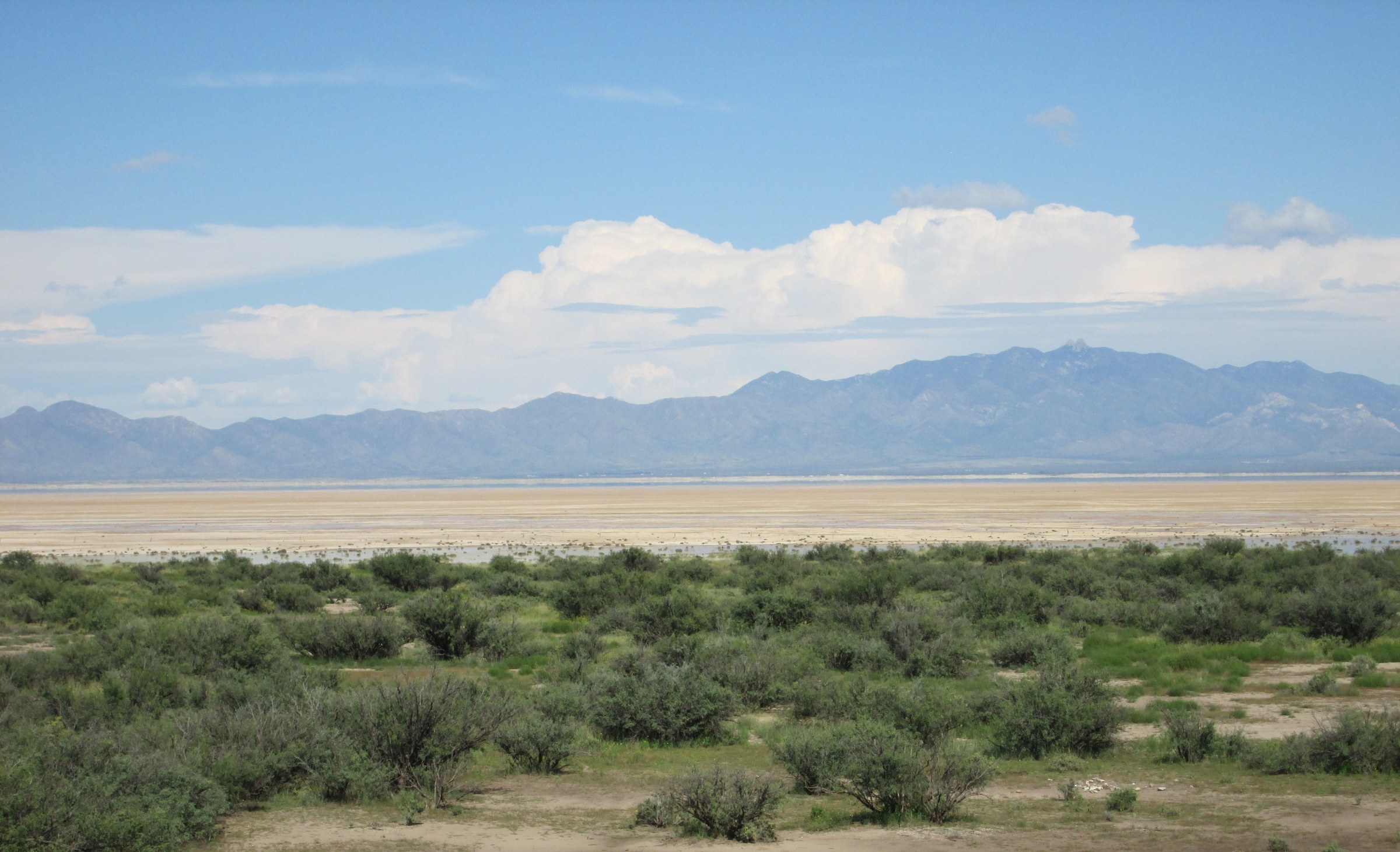
Photo: The Old Pueblo, September 25, 2014, CC BY-SA 4.0, via Wikimedia Commons. Looking east toward the Dos Cabezas Mountains from just east of Cochise, Arizona, with the Willcox Playa in the middle distance. This photo shows the setting, not the proposed campus.
A rural co-op with flat sales is being offered a customer big enough to pay for a stronger grid, and the contract written in Cochise County could become the template for how small towns host big builds. Follow the build as the county hearing and the later power review move.
What SpaceX wants to build near Willcox
SpaceX is asking Cochise County to approve a supercompute campus on about 747 acres along U.S. 191, next to Arizona Electric Power Cooperative's Apache Generating Station, just outside the town of Cochise and near Willcox, about 80 miles east of Tucson. The acreage and location come from the county's own application page for permit case SU26-22, and from 12News and AZPM reporting on the filing.
The applicant of record is Tombstone Resources LLC, “a wholly owned subsidiary of SpaceX,” Sheila McCorkle, SpaceX's vice president for Starship legal, wrote in a November 24, 2026 letter to the county Planning and Zoning Commission. “SpaceX will build, own and operate the campus.” The application covers all four phases, up to nine computing buildings and up to six gigawatts at full buildout. SpaceX's project page says each of the nine single-story compute buildings would be about 493,000 square feet, and that the first phase is 1.5 gigawatts. For what one gigawatt of computing load means, see one gigawatt, in context.
SpaceX says it has “committed to invest $50 billion.” That is SpaceX's figure. Tucson Daily Brief noted on November 25 that the county application does not give a total. SpaceX's page and letter estimate about 1,000 ongoing on-site jobs, including contractor roles, and about 5,500 construction jobs at peak. For how data-center job counts usually compare with that kind of claim, see how many local jobs a data center really adds.
SSVEC's project FAQ, last revised October 26, 2026, says the developer's preliminary schedule targets a spring 2027 construction start, “with the first stage potentially coming online 3 to 6 months later,” subject to approvals, load studies and infrastructure. The county Planning and Zoning Commission is scheduled to hear the special-use request on Wednesday, December 9, 2026, at 2 p.m. Mountain Time in Bisbee.
How one big customer can lower everyone's bill
Lawrence Berkeley National Laboratory and The Brattle Group put the mechanism in plain words in their April 2026 update on retail electricity prices: “Electricity service entails a large share of fixed costs “sunk” in grid infrastructure. All else equal, average (per-unit) costs and thus retail prices tend to go down when these costs are spread over more sales.” The same slide says “there are conditions under which growth will increase prices,” and it names three things that decide the outcome: how fully existing equipment gets used, the cost of new supply and wires, and how costs are split among customers.
That is the local opening. Sulphur Springs Valley Electric Cooperative, the distribution co-op that would serve the campus, told members a future rate increase “will likely be required due to rising costs and flat electricity sales.” It “anticipates filing a rate case in the fall of 2027.” If the project moves forward, SSVEC says, “the additional revenue could help reduce future rate pressure.” For why bills are rising nationally, see what is driving power bills. For a small town that already hosted large computing loads and protected home rates, see Quincy, Washington.
What SpaceX is offering the co-op
The 10% to 40% range on SpaceX's project page is, in the co-op's words, “SSVEC's preliminary projections.” After a November 18, 2026 board meeting, SSVEC CEO Jason Bowling told Tucson Daily Brief that SpaceX has proposed a direct bill credit for residential members, tied to how much electricity it uses, that would offset the per-kilowatt-hour distribution access charge. At current rates, he said, a fully funded credit “could cut the usage-based portion of a residential bill by about 40%.” He called it “a novel arrangement.” The credits would be smaller if only the first phase is built. Nothing in that description is final.
On the grid, SpaceX's November 24 letter says the application identifies “about $3.6 billion of transmission and substation improvements, about $0.5 billion of it in Phase 1, all paid for by SpaceX and built and owned by the cooperatives.” The work includes reconductoring existing lines, which the letter says would raise their capacity “about two and a half times on existing structures and rights-of-way,” plus new equipment at existing substations and new transmission already in development for the region. SpaceX says it would “pay for its electricity and related service costs, prepay the network upgrades required to serve the campus, and post financial security before receiving power.” The letter's next sentence is the promise co-op members will want in writing: “This will ensure that no existing customer subsidizes SpaceX.”
SSVEC lists financial guarantees, deposits, minimum payments and a rate-stability reserve among the protections under discussion. The application also describes yearly payments to a foundation in two different estimated ranges, $13 million to $53 million and $50 million to $60 million. Bowling told Tucson Daily Brief that “no specific annual contribution amount has been finalized or guaranteed.” SpaceX's project page lists additional yearly payments to the co-ops; those figures conflict with one another across SpaceX's own page and FAQ, and the co-op says they are not final, so they are not used as facts here.
On November 5, 2026, after SpaceX's town hall, SSVEC said in an official statement that it is “neither endorsing nor opposing the proposed development,” and that “no final electric service agreement has been reached, and none of these benefits is guaranteed.”
Where the power would come from
The campus would not run on a new gas-fired power plant. SpaceX's letter says Apache Generating Station's “roughly 625 megawatts” of capacity “is not directly contracted to serve the SpaceX facility.” SpaceX and AEPCO would “procure wholesale power from across the Western Interconnection market,” and “the cooperatives will determine when the system is ready to serve each phase.” Whether each phase can be served, the letter says, “depends on the availability of power, the capacity of the transmission system, and the upgrades in service at the time.”
The campus would include about 24 gigawatt-hours of batteries, “about four hours at full load,” and the letter, quoting the application, calls the load “flexible, curtailable, and interruptible.” For how gigawatts and gigawatt-hours differ, see megawatts versus megawatt-hours. Each computing building would have about 10 megawatts of natural-gas standby generators for outages and testing; no bulk fuel would be stored on site, SpaceX says. A large solar and battery plant, Roadrunner, is already being built near Cochise to serve rural co-ops; see solar and batteries in new American builds.
Arizona Attorney General Kris Mayes, in a November 19, 2026 press release, said six gigawatts is “nearly 20 percent of Arizona's current power-generating capacity,” and asked the commission to delay its vote until state and federal reviews are further along. Her chief of staff, Richie Taylor, told Tucson Daily Brief on November 25 that the office “has not identified sufficient available transmission capacity” for the first 1.5 gigawatts, and that the interstate transmission system “has constraints and bottlenecks as it is.” SpaceX's letter says those later power reviews stay in their own proceedings, and asks the county to keep the December 9 land-use hearing on the calendar.
Water: dry cooling and no new industrial well
SpaceX says the campus would use dry, closed-loop cooling, with no cooling towers or evaporative spray. The November 24 letter estimates annual water use of 7 to 10 acre-feet at full buildout, “primarily for drinking water and restrooms.” SpaceX's project page compares “up to 10” acre-feet a year to about what 20 to 30 Arizona homes use. The site sits in the Willcox Active Management Area. AZPM reported that “the Willcox Basin is experiencing the fastest subsidence throughout the state of Arizona.”
The yearly 7 to 10 acre-feet figure does not include a one-time fill of the cooling loops, construction water, or the water used to generate the campus's electricity. AZPM, reading the application, puts the fill at about 10 to 18 acre-feet over the multi-year buildout, planned from treated wastewater. SpaceX's letter says it proposes “no new production well in the Willcox Active Management Area for industrial use of groundwater,” and that the initial fill “would be met with treated wastewater from the adjoining station or trucked water, without new pumping from the Willcox basin.” It also says SpaceX “supports making these commitments enforceable” and specifying how compliance will be verified for the life of the facility.
The City of Willcox, in a November 3, 2026 letter signed by Mayor Greg Hancock, is not opposed to the proposal, the Sierra Vista Herald / Willcox Range News reported on November 19. The city asked SpaceX to fund verified groundwater pumping cuts elsewhere in the basin at twice the amount the facility consumes, and to sign a community benefits agreement. Related chip-factory builds in the state are covered in advanced chips in the Phoenix area and why chip factories are so big.
Get the free Monday Haul, which follows big builds like this one each week.
The Monday Haul · free weekly email
Energy, industry, infrastructure and policy in one short email every Monday, including new factories and grid projects. Every item sourced and dated. More about the Haul
Who decides, and when
Land use is a county decision. The Planning and Zoning Commission is scheduled to hear SU26-22 on Wednesday, December 9, 2026, at 2 p.m. Mountain Time in the Board of Supervisors hearing room in Bisbee, and on Microsoft Teams. Cochise County says the hearing was moved from 4 p.m. to 2 p.m. because of public interest. A majority vote of the commission decides the special-use request, and “the decision is final unless appealed to the Board of Supervisors,” the county's data-center page says. No clearing, grading or buildings can follow unless later county, state transportation and environmental permits are also in place, SpaceX's letter says.
Attorney General Mayes is hosting a public town hall on Thursday, December 3, from 5:30 to 7 p.m. Mountain Time at the Cochise Elementary School gymnasium.
The power deal is a separate track. The SpaceX letter says no retail electric service can begin until the Arizona Corporation Commission approves the Electric Energy Services Agreement among SSVEC, AEPCO and Tombstone Resources LLC. The commission approved the co-ops' large-load review process unanimously on August 12, 2026, the American Public Power Association reported. Staff must test that the agreement is in the public interest, that rates are reasonable, and that “no other customer class” subsidizes the large customer. Bowling told Tucson Daily Brief that co-op members will not vote on the deal: the board approves business agreements, then the ACC reviews them in a public proceeding. SSVEC still says no agreement has been finalized, and SpaceX has not announced a filing at the commission.
Where people land
Four camps in the debate over SpaceX's proposed campus in Cochise County. Each camp gets the same space. This is not a poll, and the segments are not shares of support.
The question
Should Cochise County host the SpaceX campus, and on what terms?
Where they agree Every side says the people already on the co-op should not pay for this project. SpaceX says its deal “will ensure that no existing customer subsidizes SpaceX”; SSVEC says “growth pays for growth”; the ACC's process tests that no other customer class subsidizes a large load; Willcox and the attorney general both ask for commitments that can be enforced, and SpaceX says it “supports making these commitments enforceable.” The fight is over whether the promises are written down tightly enough, and how fast.
Build it, the region wins
A customer this big can pay for a grid the co-op could never afford alone, lower home bills, and bring thousands of building jobs to a rural county, they say. Hold the hearing, set the conditions, and let the later state approvals do their job. SpaceX's November 24 letter tells the commission: “This will ensure that no existing customer subsidizes SpaceX.” Jason Morris, a land use and zoning attorney, told 12News on November 20, 2026: “In an area like Cochise County, this could be a huge economic boom.”
What they get right Utility costs are mostly fixed, and prices tend to fall when those costs are spread over more sales, Lawrence Berkeley National Laboratory and The Brattle Group wrote in April 2026. SSVEC says its own sales are flat, with a rate case expected in the fall of 2027.
The benefits could be real and large, they say, but a slide deck binds no one. Lock the bill credit, the guarantees and the local hiring into signed agreements before anything is built. After the November 18 board meeting, SSVEC CEO Jason Bowling told Tucson Daily Brief that protections must be “clearly established in enforceable agreements, not just bullets on a PowerPoint slide.” The City of Willcox, in a November 3 letter signed by Mayor Greg Hancock, put its own line on the record, as reported by the Sierra Vista Herald: “The City is not opposed to the proposal.”
What they get right SSVEC says no agreement has been finalized and the benefits are not guaranteed, and the foundation payments appear in two different estimated ranges in the application.
This is a sinking groundwater basin beside a National Natural Landmark where thousands of sandhill cranes winter, they say. Get independent studies and write hard limits on water, noise and light into the permit. Ryan Czarnecki, a Richland Ranchettes resident who lives less than two miles from the site, told 12News on November 20, 2026: “I think that some third party and some independent study needs to be brought in here that's not connected with SpaceX.” Winton D. Woods, in an opinion column in the Arizona Daily Star on November 22, 2026, wrote: “A promise at a town hall microphone binds no one.”
What they get right The site is in the Willcox Active Management Area, and AZPM reports that the Willcox Basin has the fastest subsidence in Arizona. The 7 to 10 acre-feet a year figure excludes the one-time loop fill and construction water.
Six gigawatts is a huge new load for Arizona, they say, and the nearby plant makes only a fraction of it. Let the state and federal reviews show where the power and the transmission come from before the county says yes. Attorney General Kris Mayes, in her November 19 press release, said: “The people of Cochise County deserve answers before county officials approve a project of this magnitude.” Richie Taylor, her chief of staff, told Tucson Daily Brief on November 25 that the interstate transmission system “has constraints and bottlenecks as it is.”
What they get right SpaceX's own letter says Apache Station's roughly 625 megawatts is not contracted to the campus, and that whether each phase can be served “depends on the availability of power, the capacity of the transmission system, and the upgrades in service at the time.”
The deal is being written now Whatever the commission decides on December 9th, the deal being written here, a giant customer that prepays its own wires, posts security and shares the savings, is a model rural America can use to host the next wave of building. If approvals land, construction is targeted for spring 2027.
What to watch next
Tuesday, December 1: Cochise County supervisors have a work session on water with Arizona State University's Kyl Center for Water Policy, Tucson Daily Brief reported on November 24. KVOA reported on November 25 that supervisors would also consider their draft reply to the attorney general.
Thursday, December 3: Attorney General Mayes hosts a town hall at the Cochise Elementary School gym, 5:30 to 7 p.m. Mountain Time.
Wednesday, December 9: Planning and Zoning Commission hearing on SU26-22 in Bisbee, 2 p.m. Mountain Time.
When filed: the SSVEC, AEPCO and SpaceX energy services agreement at the Arizona Corporation Commission. Dollar amounts for the bill credit and the protections become real only there.
Spring 2027: targeted construction start, if approvals land.
Common questions
Will this raise my SSVEC bill?
SSVEC's project FAQ answers this directly: “No. SSVEC will require the developer to pay the costs associated with serving this project,” meaning members would not bear the cost. The same FAQ says the project could also provide financial benefits, “depending on the final agreement and ACC approval.” Protections are still under negotiation. SSVEC has also told members that a future rate increase will likely be required because of rising costs and flat sales, with a rate case expected in the fall of 2027, and that those pressures exist independently of this project.
What happens if the data center leaves early or never fills up?
SSVEC says it is negotiating financial guarantees, deposits, minimum payments and a rate-stability reserve so existing members “will not pay any project-related costs should the data center close early or use less electricity than planned.” SpaceX's November 24 letter says the proposed protections are designed to keep project costs with SpaceX, “including if the campus is delayed, built at a smaller scale, or never built.” Those terms are not signed, and they need ACC approval.
Does the campus get extra votes in the co-op?
No. SSVEC's FAQ says the developer “would have one membership vote, just like every other SSVEC member.” Purchasing more electricity would not add voting rights.
Will it use the Willcox basin's groundwater?
SpaceX's letter says it proposes no new production well in the Willcox Active Management Area for industrial use of groundwater, and that the cooling-loop fill would come from treated wastewater at the adjoining station or from trucked water. The 7 to 10 acre-feet a year figure is for ongoing use at full buildout, primarily drinking water and restrooms. It does not include the one-time fill (about 10 to 18 acre-feet over the multi-year buildout, per AZPM's reading of the application) or construction water.